Signs Your Dentures Need an Adjustment or Reline

Source: Dr. Marketing
Wearing removable teeth should feel almost invisible—no rocking when you laugh, no pinching when you chew, no adhesive emergencies at brunch. When a plate suddenly wobbles, pinches, or raises sore spots, your mouth has changed—even if the appliance itself looks intact. Ignoring early clues can trigger ulcers, accelerate bone loss, and balloon repair costs. This guide explains precisely when denture adjustments and relines are essential, how each service restores comfort, and why timely care keeps your smile stable for years to come.
What Are Denture Adjustments and Relines?
Understanding the Purpose of Adjustments and Relines
Adjustments = minor trimming, polishing, or clasp-tightening that removes pressure points and stops rocking.
Relines = resurfacing the entire fitting surface with fresh acrylic or silicone, compensating for bone changes.
Together, these services form the clinical denture adjustments and relines definition accepted by denturists across Alberta.
How They Improve Fit and Function Over Time
A precise reline revives suction, re-centres your bite, restores efficient chewing, and lets you pronounce “f,” “s,” and “th” crisply again. Regular adjustments prevent acrylic from digging into delicate tissue and preserve speech clarity.
When Do You Need One or the Other?

Small hot-spots days after delivery → adjustment.
Noticeable looseness after weight change, extraction, or two years of wear → reline.
Common Signs You Need a Denture Adjustment or Reline
- Dentures Feel Loose or Shift While Talking: If you subconsciously bite to steady plates—or if edges lift when you yawn—the suction seal is gone.
- Sore Spots, Irritation, or Pain: Red patches under the base signal uneven load. Left untreated, they can evolve into ulcers and yeast infections.
- Difficulty Chewing or Speaking Clearly: Switching back to soft foods or stumbling over consonants indicates lost vertical dimension or severely worn tooth surfaces.
- Visible Cracks, Wear, or Changes in Fit: Hairline fractures spread fast; a preventive polish during an adjustment costs far less than a full remake.
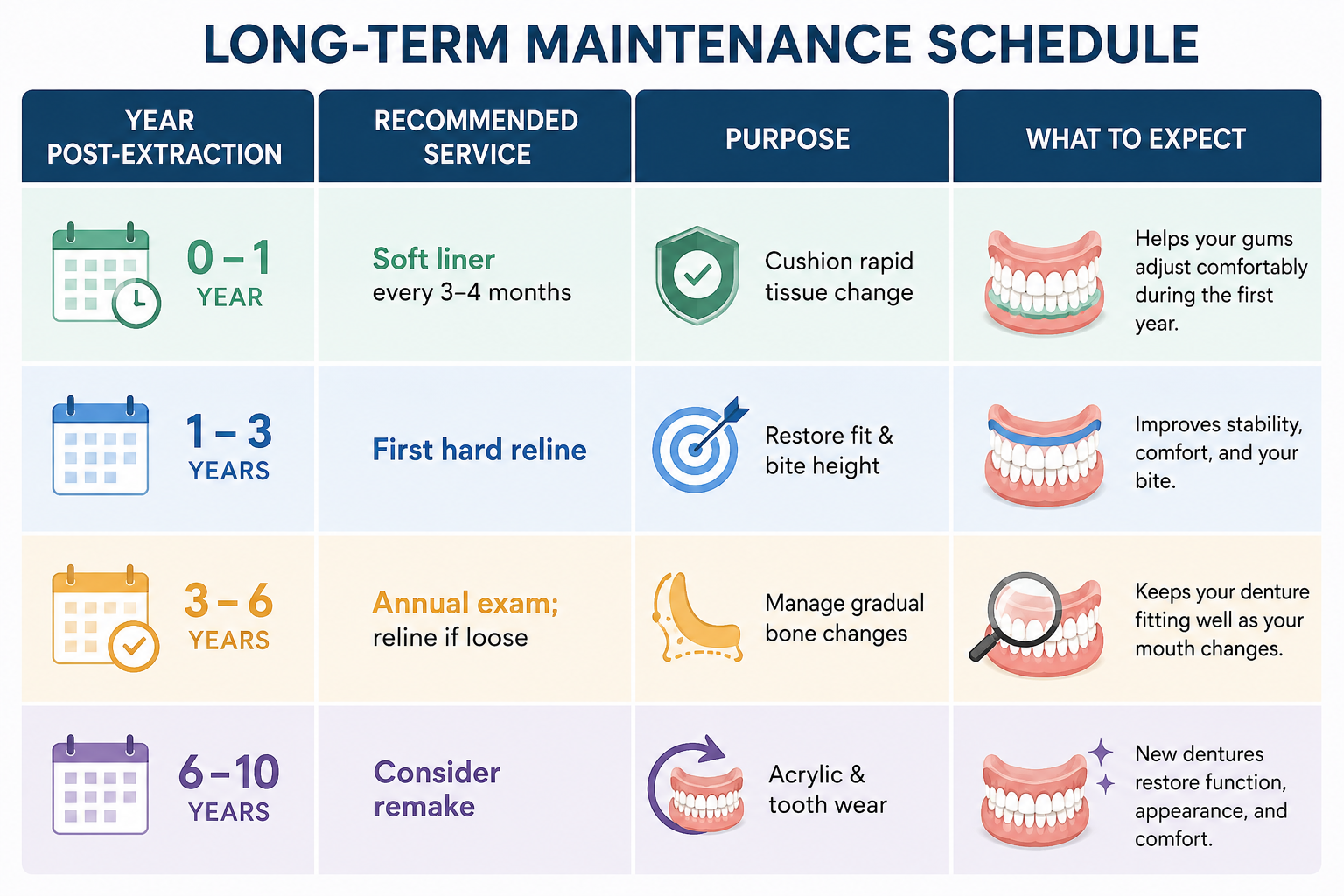
- Recent Weight Loss or Gum Shrinkage: Even five kilograms can alter ridge contours. Post-extraction bone remodels rapidly for twenty-four months.
Special Cases—Immediate Denture Adjustments and Relines
Why Immediate Plates Need Frequent Follow-Ups
Placed the same day as extractions, they sit over swollen gums. Rapid shrinkage demands several soft liners within the first six months.
Adapting to Fast Gum and Bone Changes
Your denturist schedules liners at week 1, month 1, and month 3; skipping visits risks deep sores, angular cheilitis, and warped occlusion.
What About Partial Denture Adjustments and Relines?
Challenges Unique to Partial Appliances
Natural teeth drift subtly. Clasps loosen, saddles gap, and imbalanced chewing strains abutment teeth.
Ensuring Proper Fit Around Natural Teeth
A partial reline fills voids beneath saddles, while clasp tightening restores retention and protects enamel from torque.
The Denture Adjustment & Reline Process Explained

What to Expect During Your Appointment
- Visual exam plus pressure-indicator paste to reveal high spots.
- Chair-side acrylic trimming for adjustments.
- Hard reline: An impression is taken inside the denture, and fresh acrylic is bonded at the lab, often the same day.
How Long Does the Process Take?
- Adjustment: Approximately 20 minutes
- Soft reline: Approximately 1 hour
- Lab hard reline: Drop off around 9 a.m. and collect around 3 p.m.
Cost and Coverage Considerations
Many Alberta dental plans may provide coverage for denture adjustments and relines, although eligibility, frequency, and coverage amounts vary by plan. Check your specific benefits or contact your provider to confirm coverage. Flexible financing options may also be available to help spread out-of-pocket costs over multiple payments.
Frequently Missed Red Flags
- Sudden whistle on “s.”
- Food packing under the flange.
- Adhesive usage climbing from pea-size to spoonful.
- Persistent appliance breath despite cleaning.
- Cheek biting on one side only.
Prompt partial denture adjustments and relines prevent compounded issues.
Technology Spotlight—Digital Pressure Mapping
Our T-Scan™ sensor captures bite force at 0.1-second intervals, revealing micro-imbalances invisible to the naked eye. Post-reline scans confirm even pressure, protecting bone and prolonging plate life.
Home Fixes That Go Wrong
Boiling warps acrylic, super-glue traps bacteria, DIY liners detach mid-meal. Professional care is always cheaper—and safer—than replacing a damaged plate.
Nutrition & Bone Health Connection
A loose appliance discourages crunchy produce and lean protein, risking malnutrition and bone thinning. Accurate relines reopen dietary variety and support calcium intake, directly benefiting mandibular density.
Psychological Impact of Ill-Fitting Plates
Studies link chronic looseness with social withdrawal, reduced speech clarity, and heightened anxiety. Swift denture adjustments and relines restore self-esteem in addition to comfort.
Eco-Friendly Relines & Recycling
Biobased resins derived from sugar-cane cut carbon footprint by 60%. Silicone liners extend appliance life, delaying landfill waste.
Collaboration with Physiotherapists
Jaw-muscle imbalance often accompanies loose appliances. We partner with Calgary physios: after a reline, targeted exercises retrain masseter and temporalis for stable closure.
Post-Reline Adaptation Tips
- Day 1–2: Soft but structured foods—scrambled eggs, steamed veggies.
- Day 3–5: Mirror pronunciation drills; recite tongue-twisters to refine speech.
- Nightly: Remove appliance; massage gums one minute to boost circulation.
- Week 2: Introduce firmer textures like apples; chew slowly on both sides.
- Week 3: Return for micro-adjust; five-minute polish eliminates tiny burrs.
- Quarterly: Re-do self-check: mirror, cheek-puff, tongue swipe, tap test, speech drill.
Insurance & Funding Guide
Alberta Seniors Benefit covers basic relines every 24 months; most private plans reimburse premium materials; interest-free payment plans require no credit check.
Comprehensive FAQ
- How often should I book a fit check? — Twice yearly. Small changes caught early mean quick, low-cost fixes.
- Can a soft liner be permanent? — Silicone lasts 18–24 months, then hardens and must be replaced.
- Will a reline change my smile? — Tooth height and shade stay identical; only the tissue side adapts.
- Do partials need relines too? — Absolutely—gum shrinkage affects every saddle that rides on tissue.
Don’t Ignore the Signs — Get a Professional Evaluation
When to Call Your Denturist
Subtle changes add up. Book an appointment if your appliance:
- feels loose, rocks when you chew, or needs more adhesive than usual;
- creates sore spots, ulcers, or red areas that don’t settle within 48–72 hours;
- clicks, lifts when you talk or laugh, or causes new lisping;
- traps food along the borders or under the palate;
- shows cracks, worn teeth, or a thinning base;
- follows a recent change in weight, new medication, extractions, or illness;
- hasn’t been checked in 12–24 months.
Early attention keeps a small pressure point from becoming a painful lesion and prevents avoidable remakes.
Preventing Further Oral Health Issues
A poor fit rubs tissues, invites fungal overgrowth, and accelerates ridge resorption. Chewing shifts to soft, low-protein foods, which can impact overall health. Jaw strain and headaches also become more common when the bite is off. Reduce risks by:
- scheduling timely adjustments at the first sign of rubbing or looseness;
- keeping a daily cleaning routine (brush the device, then soak in a non-abrasive cleanser; rinse thoroughly before wear);
- removing the appliance overnight to let tissues recover;
- avoiding very hot water and harsh chemicals that warp or weaken the base;
- bringing the device and your case history to each visit so occlusion, borders, and tissue health can be checked together.
Small, well-timed corrections—polishing a flange, re-establishing borders, or adding a soft liner—protect the mouth and extend the life of your prosthesis.
Book a Reline or Adjustment in Calgary Today
Comfort can often be restored in a single visit. A typical appointment includes a fit assessment, pressure mapping, bite check, and targeted reshaping. If the base no longer matches your ridge, your clinician will recommend the right reline: a chairside temporary soft liner for immediate relief, or a laboratory hard reline for long-term stability. Many cases use digital scans to speed turnaround and improve precision.
If you’re noticing looseness, sore spots, or changes in speech or chewing, arrange an evaluation now. A quick adjustment—or a well-planned reline—can restore security, protect your oral tissues, and help you eat and speak with confidence again.
Recent Posts