How to Remove Tartar From Dentures Instantly

Source: Dr. Marketing
Sticky deposits on removable teeth are more than cosmetic; they trap bacteria and odour. People searching how to remove tartar from dentures instantly want a fast, safe way to restore a smooth surface without damaging their appliance. Alberta Dentures focuses on professional cleaning rather than risky home tricks, because true “instant” results need clinical tools designed for hardened buildup.
What is Tartar and Why Brushing Isn’t Enough?
Soft plaque forms when food particles, saliva, and microbes cling to artificial teeth and the pink base during the day. If this film isn’t cleared, minerals from saliva convert it into calcified deposits called tartar or calculus. Over time, these crusty bands look yellow or brown and feel rough; that is what does calcified tartar look like on a prosthetic plate or partial.
Standard brushing reduces soft plaque but cannot break the strong mineral bond once deposits harden. That is why people keep asking how to remove tartar from dentures or how to get tartar off dentures when daily cleaning no longer makes surfaces smooth. Ordinary toothpaste is designed for enamel and often contains abrasives that scratch acrylic yet still don’t detach heavy calculus, which explains why can't toothpaste remove tartar effectively from removable appliances.
From a search‑intent view, users typing how to remove tartar from dentures instantly or what breaks down tartar fast want rapid answers and usually find guides that promote hydrogen peroxide, vinegar, baking soda, or scraping tools. These pages often underplay long‑term material damage, so clinics like Alberta Dentures prefer in‑office procedures instead.
For broader hygiene guidance, the Care For Dentures resource outlines night‑time steps that protect both the appliance and oral tissues. To learn about the team and clinical philosophy, visit the About page on the clinic website.
The Risks of Using Common Home Remedies

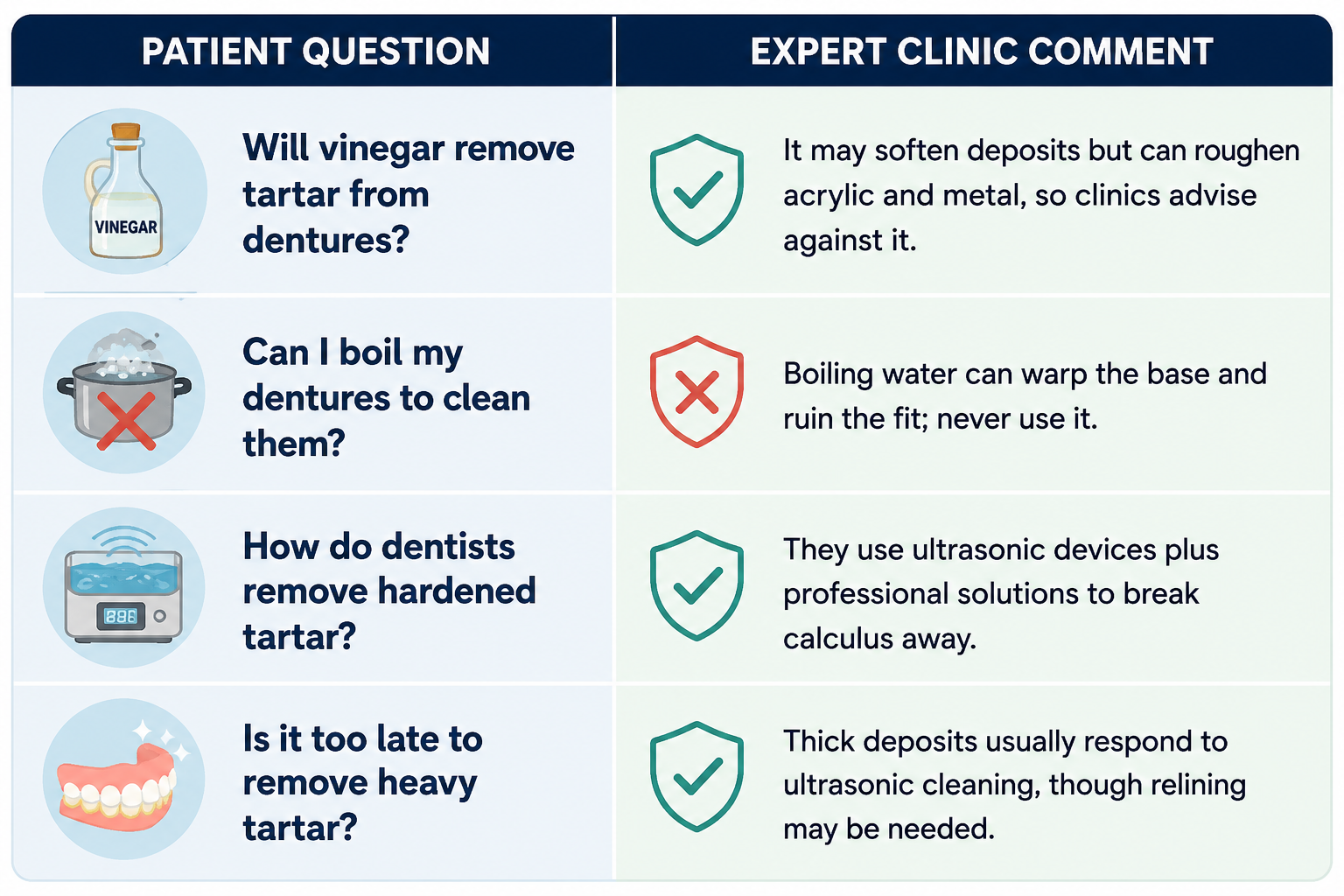
Several articles attempt answering, " will vinegar remove tartar from dentures ?" by suggesting strong acidity (soak in an acidic solution). In effect, acid changes the properties of acrylic by making it highly porous and accelerating the potential for developing additional stains. In addition, acid may corrode metallic components of partials. So while people ask can white vinegar remove hardened tartar, due to these reasons of using undiluted or frequent vinegar soaks, clinical team members will usually not recommend them.
Often touted in ‘natural cleaner’ lists, what does baking soda do to dentures over time is create micro scratches across surfaces, and those tiny grooves trap new biofilm and pigments from coffee, tea, or wine. Boiling water brings its own dangers, high heat distorts acrylic bases ruining fit and making the appliance unstable or painful. If you’re wondering can I boil my dentures to clean them, the professional answer is no — boiling is one of the fastest ways to destroy an otherwise usable device.
Some posts advocate for mixed methods, encouraging their followers to ask can I soak my dentures in vinegar and baking soda overnight for more potent effects? This toxic combo doubles both acid and abrasive effects that erodes denture structure, roughens surfaces, and shortens lifespan of appliance. As an expert, a what happens if tartar isn't removed approach is serious: hardened layers keep bacteria irritants of soft tissues, promote bad 'breath', and develop sore spots beneath base.
If you are in Calgary and see these signs, you can use the Contact link to arrange a professional assessment and cleaning.
Professional Ultrasonic Cleaning: The Only Safe & Instant Solution
In‑office treatment is the only reliable answer to how to remove tartar from dentures instantly without risking cracks, warping, or excessive wear. The appliance is placed in a small tank with a specialized solution while an ultrasonic unit sends high‑frequency vibrations through the liquid. These waves create cavitation bubbles that implode against calculus, lifting hardened plaque from acrylic or metal without scraping.
The process usually takes around fifteen minutes and reaches tight areas around clasps, under the ridge, and between teeth where a brush cannot reach. When people ask, how do dentists remove hardened tartar?, this ultrasonic process is the main answer followed by rinsing and inspection to make sure the deposits are gone. With heavy deposits people sometimes ask is it too late to remove heavy tartar; in most cases a ‘go’ ultrasonic cleaning is preferred although older appliances may need relining or replacing.
Alberta Dentures offers complimentary Denture Cleaning appointments in Calgary, combining ultrasonic treatment with a brief fit and tissue review.
How to Prevent Future Tartar Buildup
After a professional session, the focus moves from removal to prevention instead of repeatedly asking how to get tartar off dentures. Most guidance suggests wearing removable teeth during the day and taking them out at night so the mouth can rest and hygiene routines can be completed.
A simple evening routine keeps plaque soft and easier to clear:
- Rinse under cool or warm water after meals to remove loose debris.
- Brush gently with a soft brush and non‑abrasive cleaner, not regular toothpaste.
- Soak overnight in fresh water or a recommended solution, never hot water.
- Store in a safe container to avoid falls and damage.
The Care For Dentures guideline explains this bedtime routine in more depth and highlights which products are appropriate. From a clinical perspective, combining daily cleaning with periodic professional sessions is the most reliable answer to what breaks down tartar fast without damaging the appliance. For broader information about services, materials, and patient support, you can explore the main Alberta Dentures site.
FAQ
Can white vinegar remove hardened tartar?
White vinegar can soften some mineral deposits on removable teeth, but it also makes acrylic more porous and may corrode metal components over time. Because of this damage risk, most clinics do not recommend vinegar as a primary method for removing hardened tartar and instead suggest professional ultrasonic cleaning.
What breaks down tartar fast?
On removable prostheses, only professional cleaning with ultrasonic equipment and carefully formulated solutions reliably breaks down tartar fast without harming the material. Effervescent tablets and mild daily cleansers help control soft plaque and stains but cannot safely detach thick, calcified bands once they have formed.
How do you get hardened plaque off dentures?
The safest way to remove hardened plaque from an appliance is to have a denture clinic place it in an ultrasonic bath that shakes deposits loose while protecting the surface. After this treatment, the team may brush and inspect the device to confirm that calculus is gone and the fit remains comfortable.
How many hours a day should you keep dentures in?
Most guidance suggests wearing removable teeth during waking hours and taking them out at night so the tissues can rest and hygiene routines can be completed. Your denturist may adjust this schedule based on your bite, bone support, or any implant attachments, so it is best to follow their specific instructions.
Can I scrape tartar off my dentures myself?
Using sharp tools at home can gouge acrylic, bend clasps, and create new plaque traps, which increases the risk of fractures and sore spots. For that reason, scraping tartar yourself is not advised; a professional team with the correct instruments should handle any hardened buildup.
Recent Posts